Saturday, 8 February 2014

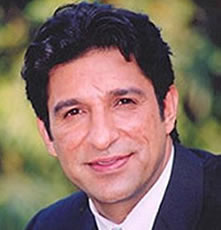
Waqar Younus

Waqar Younus Biography

sponsered link(www.google.com)
Waqar Younis Maitla is a former Pakistani right arm fast bowler in cricket and widely regarded as one of the best fast bowlers of all time.He was best known in cricket for his ability to reverse swing a cricket ball at high speed when bowling at the cricket pitch. He took 373 Test wickets and 416 One Day International wickets during his career. He is considered to be the best exponent of the swing bowling delivery. Younis has the best strike rate for any bowler with over 200 Test wickets. He worked as a bowling coach with the national side from 2006 to 2007.Younis was appointed as the coach of the Pakistan cricket team on 3 March 2010. His managerial contract with the Pakistan Cricket Board will take part in all forms of cricket, right up to December 2011, which will include all professional competitions, such as the 2011 Cricket World Cup.
Younis was born in Vehari, Punjab in Pakistan in a Jatt family. He was educated in Sadiq Public School in Bahawalpur in Pakistan, the Pakistani College (Pakistan Islamia Higher Secondary School) in Sharjah and the Government College University in Vehari. He was raised in Sharjah in the United Arab Emirates, where his father was a contract worker. He returned to Pakistan during his adolescent years and there, he started playing cricket.He is married to Dr. Faryal Waqar Younis with a son Azaan Waqar and a daughter Maira Waqar and now lives in Castle Hill in Australia. Younis has also worked as a television sports commentator for the Nine Network in Australia and for Ten Sports in the United Arab Emirates.Younis began his cricket career in Pakistan, playing for several First-class cricket clubs. However he suffered an injury when he had cut and removed his little finger on his left hand, after he had jumped into a canal. He recovered from this accident and went on to continue his sporting career. He was eventually discovered by former Pakistan captain, Imran Khan and was selected to be part of the national side. The turning point of his career happened in England, during the late 1980s and early 1990s, when he played for Surrey County Cricket Club. There he displayed excellent cricketing performances and attracted attention from the sporting public.He made his International cricket debut for Pakistan against India on 15 November 1989, in the same match that Indian batsman Sachin Tendulkar also made his debut. Younis took 4 wickets in the drawn match including the wickets of Tendulkar and Kapil Dev. He made an immediate impression with his speed and became known in the cricket media as "Wiki" or the "Burewala Express". Younis along with Wasim Akram opened the bowling attack regularly for Pakistan, becoming a feared and potent attack. His most recognized delivery was an inswinging yorker. At his peak, he developed into a very quick fast bowler and also became famous for achieving a hat-trick in a One Day International match against New Zealand in 1994. He won the English County Championship with Glamorgan in 1997. During the early periods of 2000, he stayed out of the Pakistan team for a brief period allegedly due to suspension and conflicts with bowling partner and captain Wasim Akram. His return to cricket came with him being appointed the captain of Pakistan, a position he held until his team failed to make an impact in the 2003 Cricket World Cup. He retired from cricket in 2003 after the Pakistan Cricket Board persistently ignored him for national selection.In March 2006, he was appointed as the bowling coach for Pakistan. He resigned from this position on 6 January 2007 in protest against the Pakistan Cricket Board decision to retain him only for the Test series against South Africa and not for the subsequent series of five One Day International matches. He was re-appointed as Pakistan's bowling and fielding coach for their tour of Australia in December 2009. In February 2010, Younis was appointed the head coach of Pakistan after Intikhab Alam was sacked as coach, due to the low-level of performances of the national side during the tour of Australia earlier that year.Waqar's first job as coach was to lead an inexperienced Pakistan side missing Younis Khan, Mohammad Yousuf and Shoaib Malik to the 2010 ICC World Twenty20 as a consolation though Waqar had two top-notch bowlers in Mohammad Amir and Mohammad Asif at his disposal. He guided the defending champions to the semi-final of the tournament before the were knocked out by Australia courtesy of a superb 60* by Mike Hussey who whacked three sixes in the final over to seal the victory.The World Twenty20 was followed with the 2010 Asia Cup in which Pakistan lost to Sri Lanka by a narrow-margin as Pakistan's top order collapsed and it was Shahid Afridi who scored 112 to nearly guide Pakistan to victory.

Waqar Younus

Waqar Younus


Waqar Younus


Waqar Younus


Waqar Younus


Waqar Younus


Waqar Younus


Waqar Younus


Waqar Younus


Waqar Younus


Waqar Younus


Waseem Akram

Waseem Akram Biography

sponsered link (www.google.com)
Wasim Akram (born June 3, 1966 in Lahore, Punjab) is a former Pakistani cricketer. He was a left-arm fast bowler and left-handed batsman, who represented the Pakistani cricket team in TestsOne-day.Internationals. He is widely regarded as one of the finest fast bowlers ever and holds world records for the most wickets taken in both ODIs (502) and List A cricket .An immensely talented player first discovered by Imran Khan, Wasim Akram played for his college(Govt. Islamia College Civil Lines, Lahore) as an opening bowler and batsman. As a bowler, Wasim possessed genuine pace, accurate control of line and length and seam position, and could swing the ball both in and out. With a very deceptive ball-concealing action, he could bowl equally well from both sides of the wicket. His mastery of reverse swing with the old ball meant he was at his most dangerous towards the end of an innings, and earned him the nickname Sultan of Swing.As well as often being able to find the edge of the bat, Wasim would also focus his attack on the stumps and had a particularly lethal yorker. Of his 414 Test wickets, 193 were taken caught, 119 were taken LBW and 102 were bowled.In partnership with Waqar Younis, he intimidated international batsmen in the 1990s. Together Wasim and Waqar, known as “the two Ws” of the Pakistani team, were one of the most successful bowling partnerships ever.Wasim was also skilled with the bat and was regarded as a bowling all-rounder. He was especially effective against spinners. However, he liked to slog and was criticised for his lack of big scores and giving away his wicket too cheaply for a player of his talent. He did silence his critics in October 1996 when he scored 257, not out, of the team’s total of 553 against Zimbabwe at Sheikhupura. He also made good scores in difficult times for the Pakistan team such as his 123 against Australia and his 45 not-out to take Pakistan to victory in a low-scoring match. Pakistan, needing six runs in two balls two win the Nehru Cup saw Akram come out to bat. The first ball he faced was hit out of the ground and secured the cup. Ahmed Bilal was his coach who gave him tricks on reverse swing.The fifth ODI between Pakistan and South Africa was dedicated to Wasim Akram who retired just after the World Cup. A moment to rejoice for the oppositions all over the world and the way Proteas easily beat Pakistan one could see how Pakistan missed Wasim. But things aren’t forever and as all good things must come to an end, Wasim has finally called it a day. Here’s a piece that I wrote earlier in tribute to the Big W, God’s own left arm.“First of all, convince yourself that you are the best because the rest of your life is gonna go proving this to others” -Wasim Akram, in a T.V commercial.One thing Wasim has shown us in his 19 year long career is he enacts what he says. The tremendous confidence he had as a young boy of 18 when some more ordinary guy would be nervous participating in a school debate would make even greatest of champions envious of him. He damn sure knew he was the best and boy, has he proved this to the whole world! Yes he has and in fact, he has done this in a manner that the best of the batsmen in the world fear him. But there’s good news for some new batsmen, the Sultan of Swing has finally decided to retire from international cricket. This would mean batters need not worry about a lanky fast bowler whose run up was a mere 10-15 steps but who could bowl fast, swinging toe crushing yorkers that could render even the best of batsmen mere spectators. And they also need not worry about the late swinging deliveries to which the umpires couldn’t resist raising the finger indicative of an LBW. (29% of his wickets include LBWs!). And bowlers over the world can save themselves blushes, the kind when the very same man got stuck into them and hit them a mile. (Ask Zimbabweans whom he hit for a record number of sixes in his 257 run knock.Time and again, I have seen teams fighting back against a Pakistan bowling attack after early setbacks requiring just about one and a half run per ball in the last few overs. But that’s where the party ends-because then the ball is thrown to Wasim and the whole world knows how desperately impossible it is to score at more than a run a ball when Wasim is bowling at the death. Arguably the best bowler at death, his straight late swinging yorkers are responsible for the shortening of most tails all over the world. And who said that with the advent of helmets and protective equipment, tailenders will be able to contribute more? At least not against a Wasim led Pak attack.They say that with age, flair gives way to simplicity; exuberance gives way to soberness and childhood gives way to wisdom that comes with the realization that you have grown old. Flamboyance and age happen to share a negative correlation, but not with Wasim. You have seen him around for about 19 years now, he must be old. He needs insulin everyday, a severe diabetic, he must be really old. And yet, when you watch him take his n hundred and nth wicket, the childish joy on his face makes you believe he is a young debutant who has just taken his first wicket.

Waseem Akram


Waseem Akram


Waseem Akram


Waseem Akram


Waseem Akram


Waseem Akram


Waseem Akram


Waseem Akram


Waseem Akram


Waseem Akram

Waseem Akram

Umar Gul


Umar Gul Biography

sponsered link (www.google.com)

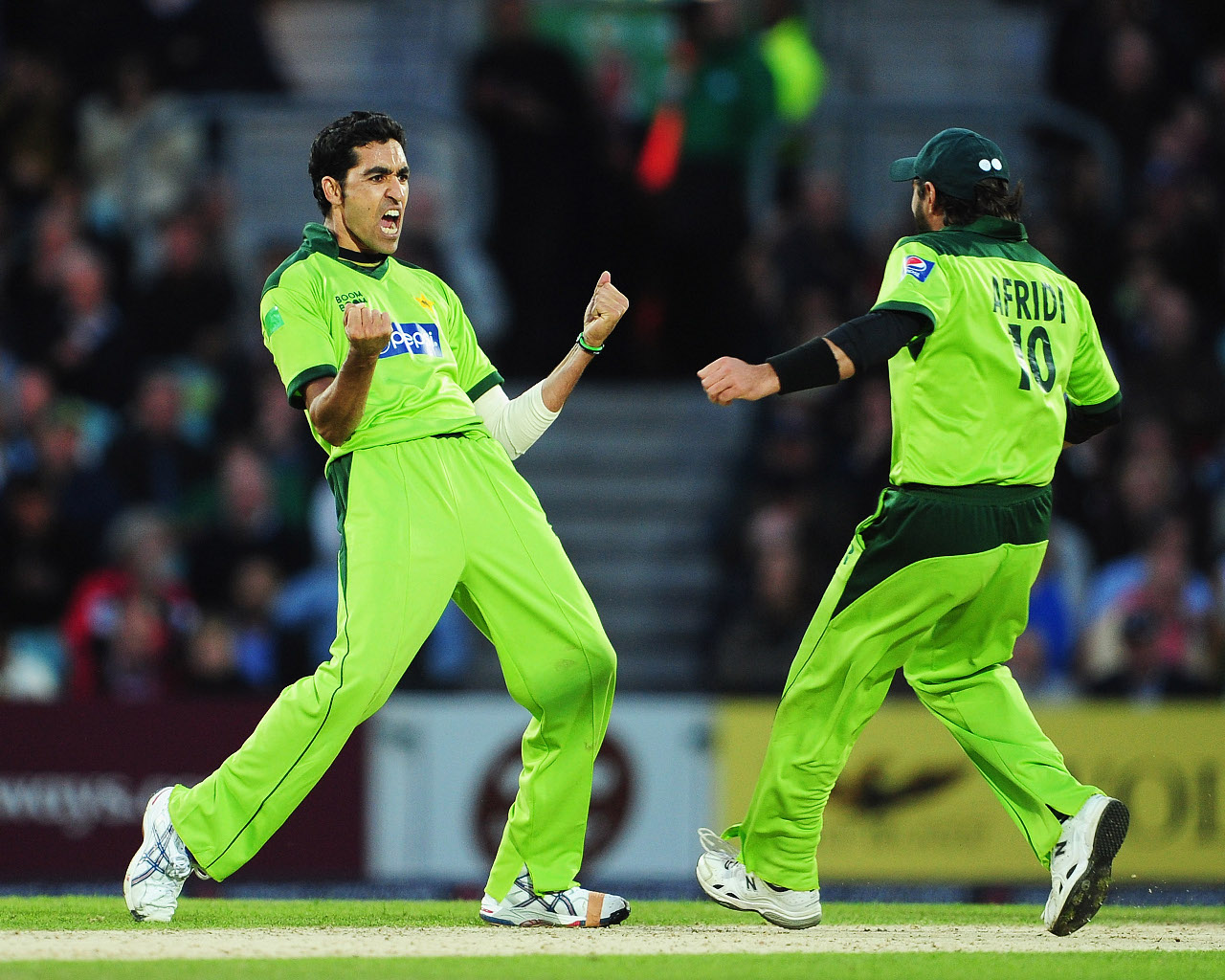
 Umar Gul is the most recent in Pakistan’s congregation-line of swiftness-bowling aptitude. He had played just nine first-class matches at what time called up for national duty in the rouse of Pakistan’s deprived 2003 World Cup. On the smooth tracks of Sharjah, Gul performed commendably, maintaining tremendous regulation and being paid appreciable out swing with the new ball.He is not articulate although bowls an extremely swift profound ball and his outstanding have power over and capability to take out line of stitching movement symbols him out. Auxiliary, his height enables him to haul out bounce on the majority outsides and from his natural back of a length, it is a constructive attribute. His first immense moment in his profession came in the Lahore Test in opposition to India in 2003-04. Unfazed by a intimidating batting line-up, Gul slashed all the way through the Indian top order, affecting the ball both ways off the ridge at a jagged velocity. His 5 for 31 in the first innings gave Pakistan near the beginning proposal which they troop home to win the Test.Unluckily, that was his final cricket of any kind for over a year as he exposed three pressure fractures in his back right away later than the Test. The wound would have wrecked several an international professions, although Gul came back, fitter and sharper than previous to in late 2005. He came back in a Pakistan shirt in opposition to India in the ODI series at home in February 2006 and in Sri Lanka given an idea about further signs of treatment by permanent both Tests but it was in actuality the second half of 2006, where he completely came of era. Leading the harass in opposition to England and then the West Indies as Pakistan’s main bowlers endured injuries, Gul stood tall, finishing Pakistan’s best bowler.Since after that, as Mohammad Asif and Shoaib Akhtar have struggled, Gul has turn out to be Pakistan’s forefront and one of the most excellent swift bowlers in the world. He is smart sufficient and good adequate to achieve something in all three set-ups and 2009 proved it: he put collectively a scrap of wicket-taking in ODIs, on departed pitches in Tests (together with a profession-best six-wicket haul in opposition to Sri Lanka) and recognized himself as the world’s most excellent Twenty20 bowler, coming on later than the early overs and firing in Yorkers on demand.He had oblique at that by being most important wicket-taker in the 2007 World Twenty20; over the after that two years he overwhelmed wherever he went, in the IPL for the Kolkatta Knight Riders and in Australia’s domestic Twenty20 tournament. Corroboration came on the grandest phase: having poleaxes Australia in a T20I in Dubai with 4-8, he was the best bowler and leading wicket-taker as Pakistan won the second World Twenty20 in England. The best part was 5-6 in opposition to New Zealand, the uppermost quality demonstration of Yorker bowling. He is not a one-format pony, on the other hand, and will hang about a vital component in Pakistan’s attack across all formats.nal wickets on subcontinent pitches- dead as dodos, not to forget a long menu of injuries he has fought. The brunt of Akram’s cricket has been borne by his groin and shoulder. His groin was first operated on in 1988 and again two years later. The latter operation was complicated when an adductor muscle separated from his pelvis, leaving his left leg only half as strong as his right: it was restored only by intensive physiotherapy.He first experienced shoulder pain seven years ago, while representing Lancashire, and delayed surgery, only to break down when he tried to bowl a bouncer during the Singer Cup Final in Sharjah in April 1997: there were further operations, a six-month lay-off and a regime of painkillers. Add to this, severe diabetes and fading eye sight. And still he continued till 2003 and stayed among the top few bowlers all through. Nothing short of a medical miracle.
.

Umar Gul


Umar Gul


Umar Gul


Umar Gul


Umar Gul


Umar Gul


Umar Gul


Umar Gul


Umar Gul


Umar Gul

Umar Gul

Shahid Afridi

Shahid Afridi Biography

Sponsored link.(google.com)

Shahid Afridi (Urdu: شاہدآفریدی‎), born Sahibzada Mohammad Shahid Khan Afridi also known as Boom Boom Afridi born on 1 March 1980)[2] is a Pakistani cricketer. Between 1996 and 2012, Afridi played 27 Tests, 350 One Day Internationals, and 59 Twenty20 Internationals (T20Is) for the Pakistani national team. He made his ODI debut on 2 October 1996 against Kenya and his Test debut on 22 October 1998 against Australia.He is known for his aggressive batting style,[3] and previously held the record for the fastest ODI century i.e.in 37 deliveries,(Now broken by Corey Anderson who took one delivery less i.e.36 deliveries) which he made in his first international innings, as well as scoring 32 runs in a single over, the third highest scoring over ever in an ODI.[4] He also holds the distinction of having hit the most number of sixes in the history of ODI cricket.[5] Afridi considers himself a better bowler than batsman, and has taken 48 Test wickets and over 350 in ODIs. Currently Afridi is third on the list of leading wicket takers in the Twenty20 format, behind Saeed Ajmal and Umer Gul of Pakistan, taking 73 wickets from 70 matches.[6] Shahid Afridi has signed to play for Sydney Thunder in Australia’s Twenty20 Big Bash league.[7] In June 2009, Afridi took over the Twenty20 captaincy from Younus Khan, and was later appointed ODI captain for the 2010 Asia Cup. In his first match as ODI captain against Sri Lanka he scored a century however Pakistan still lost by 16 runs. He then also took over the Test captaincy but resigned after one match in charge citing lack of form and ability to play Test cricket; at the same time he announced his retirement from Tests. He retained the captaincy in limited-overs form of the game and led the team in the 2011 World Cup. In May 2011, having led Pakistan in 34 ODIs, Afridi was replaced as captain. Later that month he announced his conditional retirement from international cricket in protest against his treatment by the Pakistan Cricket Board (PCB). However, in October he reversed his decision. UNICEF and Pakistani authorities have taken Shahid Afridi on board for its anti-polio campaign in the tribal belt of lawless Waziristan region.[8]Afridi was born on 1 March 1980 in Khyber Agency of the Federally Administered Tribal Areas, Pakistan. He is from the Afridi tribe of Pashtuns.[2] Afridi is married to Nadia and has four daughters.[9]In October 1996 at the age of sixteen Afridi was drafted into the ODI team during the four-nation Sameer Cup 1996–97 as a leg spinner as a replacement for the injured Mushtaq Ahmed.[10] He made his debut on 2 October against Kenya, however he didn't bat and went wicketless.[11] In the next match against Sri Lanka, Afridi batted at number three in the role of a pinch-hitter. In his first international innings, Afridi broke the record for fastest century in ODI cricket, reaching his hundred from 37 balls. The eleven sixes he struck also equalled the record for most in an ODI innings.[12][nb 1] Aged 16 years and 217 days, Afridi became the youngest player to score an ODI century.[14] Pakistan posted a total of 371, at the time the second-highest in ODIs, and won by 82 runs; Afridi was named man of the matchTwo years after appearing on the international scene, Afridi made his Test debut in the third game of a three-match series against Australia on 22 October 1998.[15] By this point he had already played 66 ODIs, at the time a record before playing Tests.[16] He opened the batting, making scores of 10 and 6, and took five wickets in the first innings.[15] He played his second Test the following January during Pakistan's tour of India; it was the first Test between the two countries since 1990.[17] Again opening the batting, Afridi scored his maiden Test century, scoring 141 runs from 191 balls. In the same match he also claimed three wickets for 54 runs.[18] After winning the first match by 12 runs, Pakistan lost the second to draw the series.[19]
In 2001, Afridi signed a contract to represent Leicestershire. In five first-class matches he scored 295 runs at an average of 42.14, including a highest score of 164,[20] and took 11 wickets at an average of 46.45;[21] Afridi also played 11 one day matches for the club, scoring 481 runs at an average of 40.08[22] and taking 18 wickets at 24.04.[23] His highest score of 95 came from 58 balls in a semi-final of the C&G Trophy to help Leicestershire beat Lancashire by seven wickets.[24] Derbyshire County Cricket Club signed Afridi to play for them in the first two months of the 2003 English cricket season.[25] In June 2004 Afridi signed with English county side Kent to play for them in three Twenty20 matches and one Totesport League match.[26]
                                                                      

Shahid Afridi


Shahid Afridi


Shahid Afridi


Shahid Afridi


Shahid Afridi


Shahid Afridi


Shahid Afridi


Shahid Afridi


Shahid Afridi

Shahid Afridi